


$75.00 – $155.00Price range: $75.00 through $155.00
You save (%)
Nicotinamide Adenine Dinucleotide (NAD+) is a critical coenzyme found in all living cells. As an essential cofactor for over 500 enzymatic reactions, NAD+ plays crucial roles in energy metabolism, DNA repair, gene expression, and cellular signaling. Research has extensively investigated age-related NAD+ decline and the potential benefits of NAD+ supplementation on cellular function, metabolism, and longevity pathways, including sirtuins.


These products are for laboratory research only and not intended for medical use. They must be handled by qualified professionals in controlled laboratory environments. This compound has not been evaluated by the FDA and is not approved for human or veterinary use.
These products are for laboratory research only and not intended for medical use. They must be handled by qualified professionals in controlled laboratory environments. This compound has not been evaluated by the FDA and is not approved for human or veterinary use.
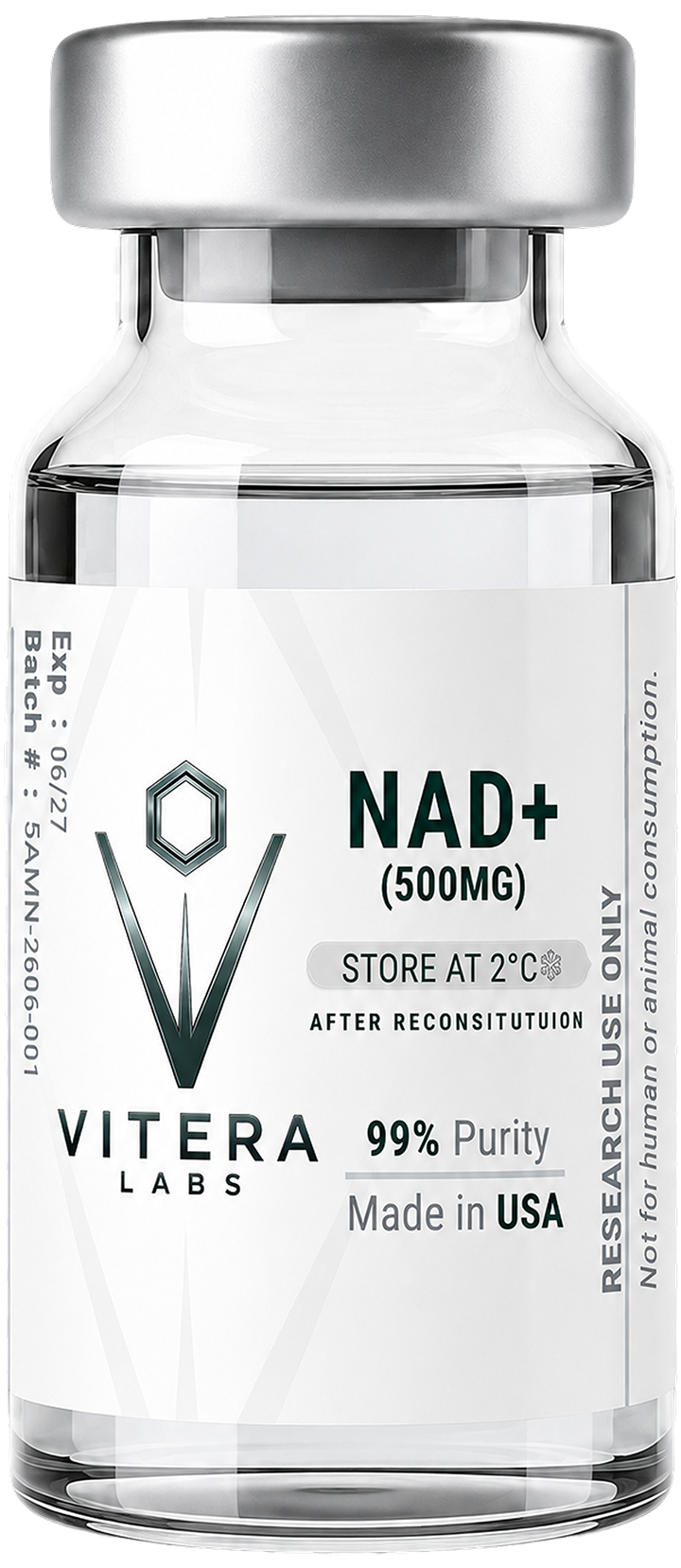
This NAD+ is supplied as a lyophilized or crystalline powder with a typical purity of ≥98% as determined by HPLC analysis. Lot-specific certificates of analysis documenting purity, identity (mass spectrometry or NMR), and appearance are available upon request.
NAD+ should be stored desiccated at −20°C and protected from light to minimize hydrolytic degradation of the glycosidic bond. Repeated freeze-thaw cycles should be avoided. Under recommended conditions, the material is stable for the period indicated on the product certificate of analysis.
For research applications, NAD+ is commonly dissolved in sterile, nuclease-free water or an appropriate aqueous buffer (e.g., PBS, Tris-HCl) to prepare stock solutions. pH should be maintained near neutrality to minimize spontaneous hydrolysis. Working solutions should be freshly prepared or stored at −80°C in single-use aliquots.
Peer-reviewed research has investigated NAD+ in diverse systems including isolated enzyme assays, mammalian cell lines (HEK293, HepG2, primary hepatocytes, neurons), ex vivo tissue preparations, and rodent in vivo models. Published literature also includes studies in yeast (Saccharomyces cerevisiae) and C. elegans as model organisms.
NAD+ is a substrate or cofactor for a broad set of enzymes studied in research contexts, including sirtuins (SIRT1–7), PARP-1/2, CD38, SARM1, and lactate dehydrogenase, among others. It also serves as a metabolic precursor within the NAD+ biosynthesis pathway studied via NAMPT, NMNAT, and NADK enzymes.
No. This product is supplied strictly for in vitro laboratory and preclinical research use only. It is not approved for, nor intended for, administration to humans or animals, and no claims regarding therapeutic, nutritional, or clinical efficacy are made.
Scientific research has identified several key areas where NAD+ shows promising applications.
These research findings represent ongoing studies and should not be interpreted as medical claims or recommendations.
These references are provided for research purposes only. Citations do not imply endorsement or approval of this product for any specific application.
